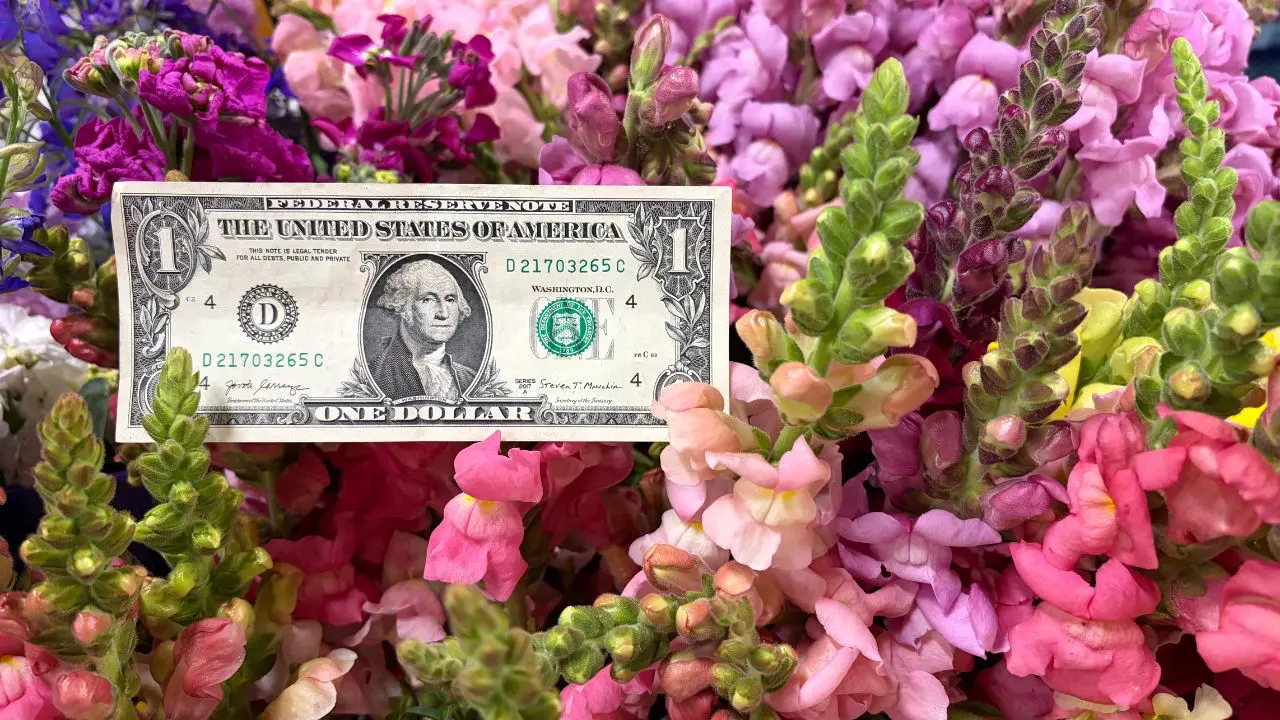
There is nothing quite like making your first sale!
Whether it is your first flower bouquet, farmers market bundle, wedding arrangement, plant, seedling, or service, that first exchange of money is exhilarating. It is proof that someone values what you have grown, created, arranged, or built. It is exciting, validating, and maybe even a little overwhelming.
But after the excitement settles, the next question arrives pretty quickly: We made our first sale. Now what?
In Episode 115 of The Flower Files, Liza walks us through the behind-the-scenes reality of what happens after that first sale, especially for flower farmers and creative business owners trying to decide how to use those first dollars wisely. This conversation is part memory lane, part practical business reflection, and part honest look at what it takes to grow with intention.
The First Sale Is Exciting, But It Is Only the Beginning
That first sale can make us want to immediately expand.
We think, “This worked! Let’s grow more. Let’s double production. Let’s add another crop. Let’s buy the equipment. Let’s build the structure.”
But one of the biggest lessons we have learned is that growth does not always mean getting bigger right away.
Sometimes the better question is: Do we need to expand, or do we need to become more efficient?
Growing a flower farm or creative business requires more than simply producing more. Every step of growth brings new needs, new expenses, and new decisions.
More flowers may mean more seed trays, more soil, more compost, more fertilizer, more irrigation, more harvest time, more cooler space, more labor, and more infrastructure. One decision often leads to another, and before long, expansion can feel a lot like If You Give a Mouse a Cookie.
Investing Flower Farm Profits Strategically
When we make those first sales, it is tempting to put the money right back into something exciting. But the best investments are usually the ones that solve an actual problem in the business.
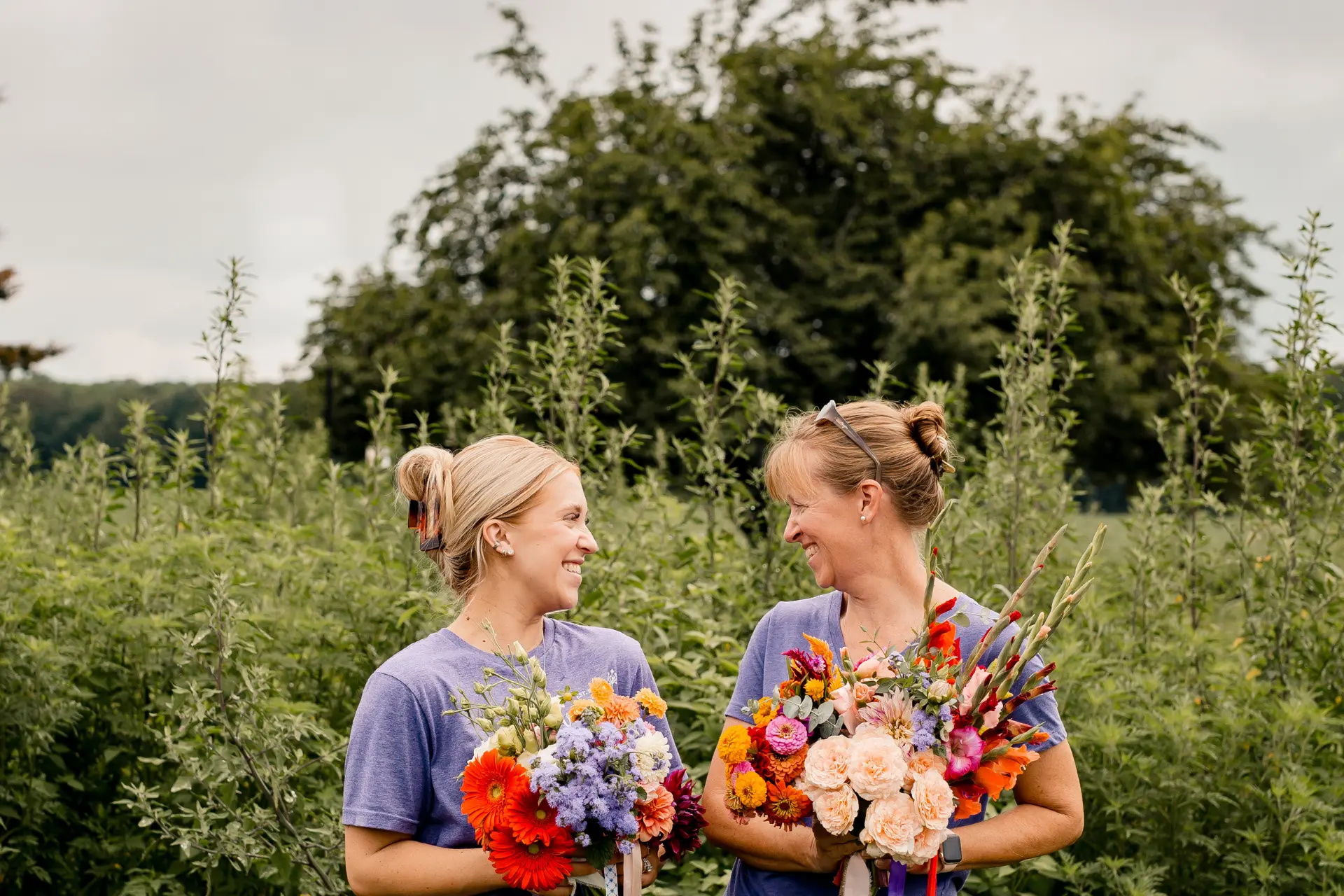
For us at Wildly Native, one of the first major needs was a controlled growing space.
Without a basement setup for grow lights and seed trays, investing in a greenhouse became an important early step. A greenhouse gave us a temperature-controlled environment where seeds and plants could get started before moving into the next stage of production.
That investment was not about looking like a “real farm.” It was about creating the conditions we needed to grow consistently.
That is the filter we keep coming back to: Does this investment help the business work better?
Greenhouse vs. Hoop House: Knowing What Each Space Does
One of the practical distinctions Liza shares in this episode is the difference between a greenhouse and a hoop house.
A greenhouse is a more controlled environment. It may include heat, temperature management, shelves, seed trays, and systems that help plants germinate and grow before moving outside.
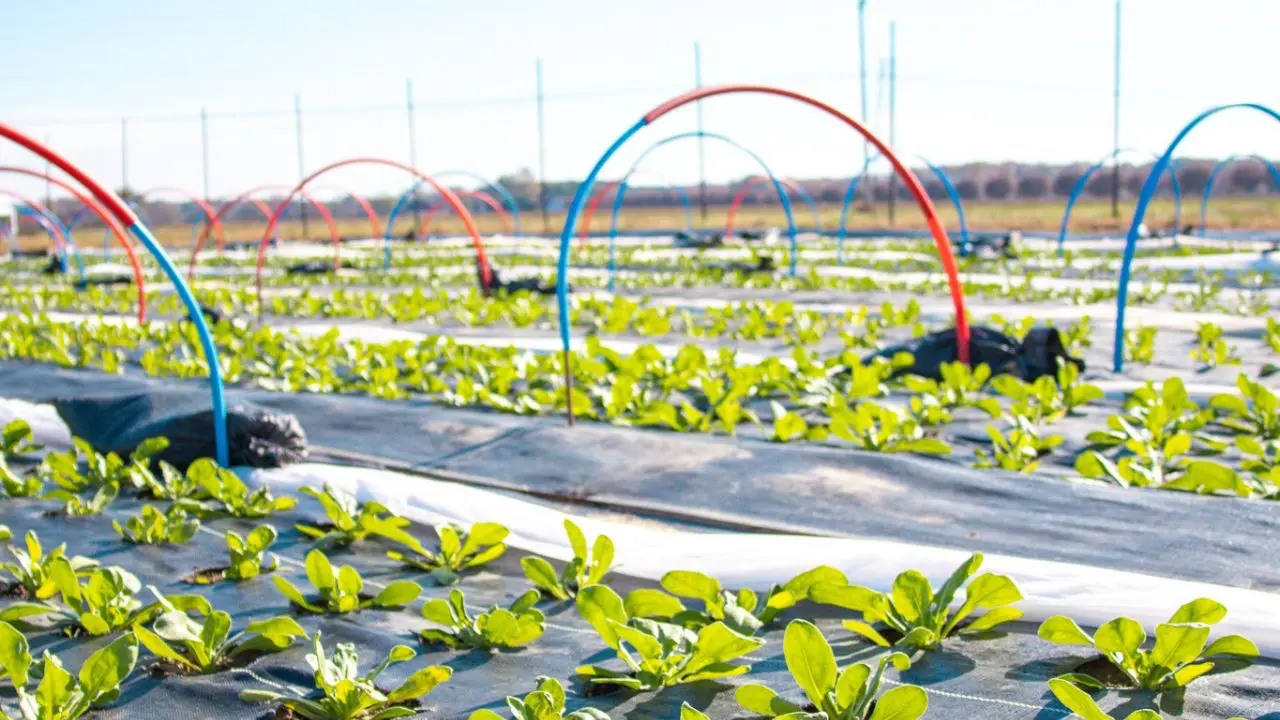
A hoop house, on the other hand, is less controlled. It extends the growing season and gives us “shoulders” on spring and fall, but it does not necessarily provide the same level of heat or environmental control.
Both spaces can be valuable, but they serve different purposes!
Our first hoop house helped us extend the season and grow crops earlier than we could have outside. Over time, we learned how to move it, improve it, repair it, and eventually use profits to upgrade growing spaces with better sidewalls, end walls, plastic, insulation, and heating strategies.
The lesson: infrastructure does not have to be perfect on day one. It can evolve as the business teaches us what we actually need.
Sometimes Holding Is the Smartest Growth Strategy
There have been years when the goal was not to expand, but just to hold.
That means staying steady, watching the bottom line, getting creative, improving profit, and making sure the next move actually makes sense.
For a flower farm business, holding can be a powerful strategy. It gives us time to understand what is working, what is costing too much, what crops are worth the effort, and where our systems need support.
Expansion can be exciting, but sustainable growth often comes from patience, observation, and careful decision-making.
Learning From Mistakes in Flower Farming
Every flower farmer has a story about a crop that taught them something the hard way.
For us, one of those lessons involved iris in the hoop house. The idea was to get them early, create a market advantage, and offer something florists would love. But they came on quickly, the hoop house got hot, and some stems were placed too far back in a refrigerator cooler where they froze.
That mistake affected the profit we expected from that crop.
But it also taught us valuable lessons about timing, crop placement, cooler management, and not putting all of one crop in one place.
Remember, mistakes are part of flower farming! The important thing is to let them inform the next business decision.
Scaling a Flower Farm Means Scaling Everything
When we first start, doubling production may feel simple.
A few more trays. A few more rows. A few more varieties.
But as the farm grows, doubling becomes much more complicated.
Going from a small plot to a half acre, or from a half acre to a full acre, means everything else has to scale too:
- More soil amendments
- More irrigation
- More weed control
- More harvest labor
- More post-harvest handling
- More storage
- More sales outlets
- More systems
If the dollar coming in does not scale along with the expenses going out, growth can become stressful very quickly! That is why we have to look beyond sales and ask whether the business model supports the next level of production.
Annuals, Perennials, Shrubs, and Greens All Matter
Another important part of growing a flower business is deciding what to grow.
It is easy to see conversations online about the “most profitable flower” or the crop everyone says new flower farmers should plant. But a strong flower farm usually needs more than one category of plant.
Annuals are important, but so are perennials, shrubs, foliage, and greens.
If we want a full floral profile throughout the season, we need variety. If we want winter sales, we may need evergreens, roping, wreath materials, and other textural ingredients. If we want wedding work, we need focal flowers, fillers, textures, and greenery that work together.
Relying too heavily on one crop can create risk. A weather event, pest issue, disease problem, or timing challenge can affect an entire harvest.
Diversity gives the business more flexibility!
Infrastructure Investments Are Often Unseen but Essential
Some of the most important investments on a flower farm are not glamorous.
They typically include fencing, hoses, fabric, rebar, hoops, stakes, benches, gravel, weed suppression, irrigation connections, and crop protection all matter.
They may not be as exciting as buying new seeds or planting a dream crop, but they make the business function.
For us, fencing became an essential investment because of deer and other pests. The farm also needed growing blocks, hoses for each section, fabric to suppress weeds, bags to hold fabric down, and support structures for crops.
These are the kinds of expenses that first sales often help fund.
They are also the kinds of expenses new growers may not always plan for at the beginning.
Know When to Follow the Plan and When to Stretch
Most of the time, we want our business decisions to follow a plan.
But sometimes an opportunity comes along that makes sense, even if it stretches the plan.
For us, that happened with a large hoop house found nearby through Facebook Marketplace. It was bigger than expected and required a lot of work to take down, move, and rebuild. But once it was in production, it became a game changer for extending the season and increasing harvest potential.
The key is not to chase every opportunity but to know your business well enough to recognize when an opportunity supports the bigger picture.
After the First Sale, Think Like a Business Owner
The first sale is emotional.
The next step has to be strategic.
Once money starts coming in, we need to think about more than production. We need to consider taxes, insurance, bookkeeping, payroll, owner draws, business structure, and how money moves through the business.
A farmers market bouquet and a wedding installation may both be flower sales, but they require very different systems, timelines, labor, pricing, and infrastructure.
That is why “what do we do after the first sale?” is really a business question.
Growing With Intention
Your first sale is worth celebrating. Absolutely celebrate it.
But after that, pause before you spend. Look at what the business needs most. Ask whether the next investment will improve efficiency, increase profit, reduce stress, extend the season, protect crops, or support your customers better.
Growth does not have to happen all at once.
Sometimes we expand. Sometimes we hold. Sometimes we repair, adjust, move, rethink, or start again.
The important thing is that every dollar has a job.
And when we use those first dollars with intention, we give the business a stronger foundation for whatever comes next.