I had an idea.
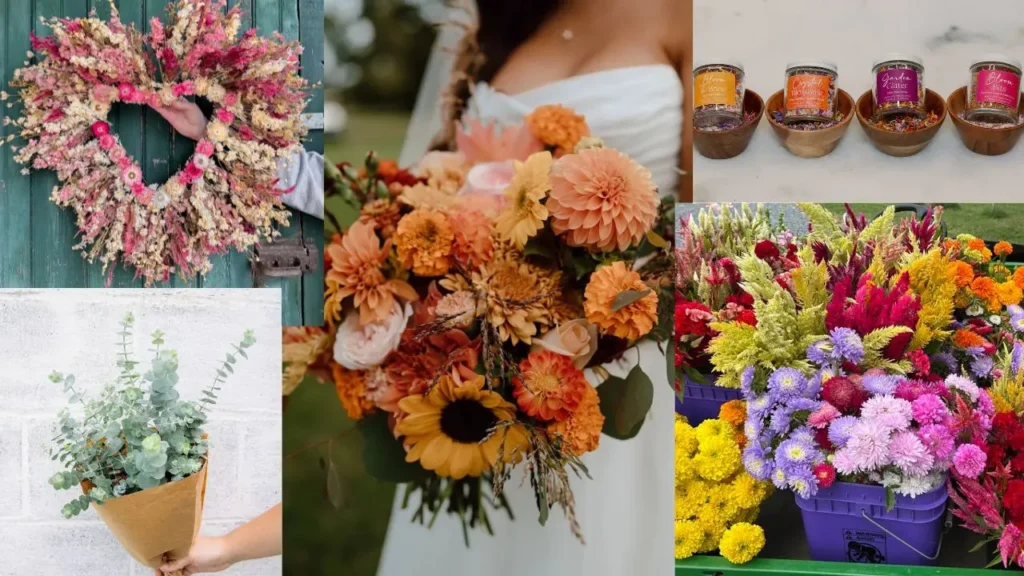
Dry our flower petals. Turn them into salts and sugars, and a garden glitter confetti. Beautiful, useful, made from things we already grow. It felt simple.
I had no idea what I was stepping into.
That idea is actually how I met today's guest. Martin works with the Maryland Department of Agriculture as their value-added agricultural specialist, and I have called him more times than I want to admit, usually opening with some version of "I think I did this right, but I have two different answers, can you help me?"
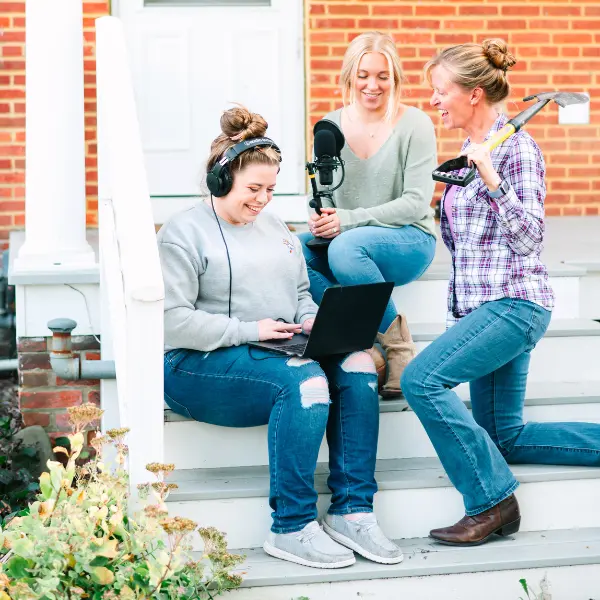
So I asked him to come on the show and explain the whole thing properly, for anybody sitting where I was sitting two years ago.
What "Value-Added Agriculture" Actually Means
Martin puts air quotes around the phrase, because it means a lot of different things.
The traditional definition is taking a raw product, running it through a process, and turning it into a higher-value product. Grapes into wine. Milk into cheese. Fruit into preserves. Tomatoes into salsa.
But it does not have to be that dramatic. Milling grain into flour counts. Rolling oats counts. The core idea is putting a raw product through a process.
And there are other ways to add value that have nothing to do with processing:
- Experiential value, which is agritourism. Bringing the public onto the farm so they understand where food comes from and what a working farm actually is.
- Marketing value, which includes certifications, packaging, and distribution channels.
One clarification Martin made is worth holding onto: agritourism is always value-added agriculture, but not all value-added agriculture is agritourism. Value-added is the umbrella.
Here is the definition that matters most in practice, though. From the Department of Agriculture's side, something becomes value-added when the regulatory scope expands beyond their department. The moment you are processing or serving food, you have introduced a health department. The moment you are hosting guests, you have introduced other agencies entirely.
That is the real dividing line. Not what you are making. Who else now has a say.
The Layers Nobody Warns You About
I asked Martin to walk through the buckets, and the honest answer is that there are several, and they stack.
State-level processing. If you are manufacturing and distributing packaged, processed goods, typically for wholesale, you are looking at state oversight through the Maryland Department of Health's Office of Food Protection.
County-level food service. If you are serving food to the public, running agritourism, or doing small-scale retail either on the farm or at a farmers market, that is generally your county health department.
His example made it click for me. An orchard turning apples into cider donuts to serve at a fall festival is regulated by the county. That same orchard pasteurizing and packaging apple cider to sell to grocery stores needs a state license.
And no, one does not replace the other. I asked directly. The state does not involve itself in the opening, cutting, heating, or serving of food. That is your local health department. So depending on what you are doing, you may need both.
Then there is everything else. Zoning. Local permitting. The state fire marshal's office, which has its own standards for public health and safety as they relate to structures. Nutrient management, which sits inside the Department of Agriculture itself.
And Maryland has 24 local jurisdictions, counting Baltimore City. Twenty-four different interpretations. I have seen this personally. I live in Kent County, and our processing is done in Caroline County. Even between two neighboring counties, the documentation they want to see is different. I remember thinking, wait, I did this at the state level, I should be fine. And the answer was no, back up, here is the book for this one.
Martin was honest about why this happens. Many of these guidelines predate the kind of businesses we are building now. Value-added agriculture and agritourism are introducing genuinely new concepts to rural communities and to farms that were, in his words, traditionally agricultural.
The Part Where I Almost Quit
I want to be honest about this, because I think people need to hear it.
There were two distinct times where we sat down as a staff and asked: do we continue with this? Does this make sense to do?
Because you finish one thing, and it unlocks the next level. And that level has ten more things. We did not know what we did not know, and you only discover that partway through, when it is too late to have planned for it.
Here is what the testing actually looked like for us.
Every single petal that goes into our mix had its own individual testing. We sent everything to Cornell. Every component, tested separately, down to the different levels.
Then, because we combine them, we had to resubmit the finished blend for approval.
Why? Because things interact. Martin mentioned that any flavor variation needs its own testing, not just each recipe. For us it was moisture. If you put something like a raisin into a dehydrated mix, the raisin pulls moisture back and rehydrates, which changes your whole formulation. So the individual components are not enough. You have to test them together.
And then there was water testing. Is your water safe to use? That specific.
It blew my mind. All the way down to the nitty gritty detail I had never once considered.
The Surprise That Was Sitting in My Own Backyard
This one still gets me.
Earlier this year I sat in a meeting and realized I should have had my own nutrient management plan in place.
I live on a farm. There is already a nutrient management plan for the property. What I had not realized was that I had crossed certain thresholds that meant I needed my own individual plan, separate from the one I was tucked inside of.
My first thought was, where on earth would I have found that?
I left that meeting and immediately got on the phone. It worked out. But that is exactly the kind of thing you cannot look up when you do not know it exists.
Why the Costs Escalate So Fast
Martin brought up something I had felt but had not been able to name.
The jump between license levels is not gradual.
His example: a farmer making a dozen jars of jam under a home license, with essentially no cost attached to it. They want to scale to two dozen jars per batch. Still not much. But that scale moves them out of the home kitchen and into a barn or outbuilding, and suddenly the license itself costs meaningfully more and they need a septic system.
Septic and water are the two words that come up over and over. For an agricultural property that has never had to think about commercial standards, those requirements get complicated, cumbersome, and expensive very quickly.
This is exactly why we rent commercial kitchen space in Caroline County rather than building our own. I can rent the amount of space I need. Installing a commercial kitchen here would open up layers of requirements, and septic alone made me stop and say, wait a minute.
Martin's point, and I think it is the most important thing he said all episode: if you approach a regulatory agency and the first thing you hear registers in your head as hundreds of thousands of dollars, you are not going to start at all. Even at a small scale.
There is not much of a middle. Mostly temporary licensure or permanent licensure, without a lot in between. That gap is a real barrier to people testing an idea before making a massive investment.
He was clear that public health and safety are genuinely the priority, and I want to be clear about that too. None of this is arbitrary. But the fixed costs often do not fit a new farm or an expanding family operation that never had that infrastructure to begin with.
The Good News, and It Is Real
Two things made an enormous difference for us.
The statewide guidance document. The Department published guidance on value-added agriculture, and it was genuinely a yeoman's job to put together. Before it existed, information was scattered in a dozen places and it was messy and confusing. Now there is one document that lays out, more or less, if you want to do this, here are the steps. Sometimes A plus B takes you to W instead of C, but at least the path is written down.
People actually help you. This is the part I want every nervous person reading this to hear.
My personal experience with the Department of Agriculture, with health departments, with all of these offices, is that I have never run across anybody who was unhelpful. When I have been honest and said, I am completely new at this, I am trying to do this thing, I do not understand that piece, people have been very, very willing to help.
Martin himself has fielded an embarrassing number of my phone calls.
He also mentioned something worth knowing: a number of Maryland counties have agricultural specialists whose whole job is being that local liaison, familiar with local zoning and permitting. Not every county has one, and there are fewer on the Eastern Shore. But even where there is no dedicated ag specialist, economic development offices are usually well versed in the industry, and the state works to keep those local representatives in the loop.
The direction they are moving is away from "let us know when you are compliant and we will put you in our directory," and toward helping people understand the road to compliance in the first place. That shift matters enormously to somebody standing at the beginning of it.
Where to Start
If you take one thing from this episode, take this: understand your zoning before you pick up the phone to call anybody else.
That was Martin's sequencing advice, and it is the opposite of what most of us do. We start with the exciting part.
The Department has a tutorial video and slide deck laying out what the framework looks like, alongside the statewide guidance document. Both are linked in the show notes, along with Maryland's Best, which is being built out as a hub for agricultural businesses and not just a promotional directory.
And if you are outside Maryland, the specifics here will not map onto your state, but the shape of it will. Find your state department of agriculture, ask who handles value-added or agritourism questions, and start with the zoning.
Keep Farmers Farming
I want to end where Martin ended, because it caught me off guard.
He said the name of the game is keeping farms farming.
I live on the farm with my folks. They are the landowners, and I am the one running around doing flowers. And I cannot tell you how many phone calls they get every week, sometimes several a week, asking if they want to sell.
The answer is no.
But the real question, the one that sits underneath all of this, is how do we keep being able to say no? How do I keep saying no for the next generation, and the one after that? How do I make sure they can say no?
Adding value is part of that answer. So is farming profitably, which is a different thing from farming. It is one thing to say I am sixth generation and I am able to do this. It is another to ask whether you are actually making a profit. And if the answer is no, then maybe you add flowers, or a jam, or an experience. But it has to make sense at the end of the day.
The work Martin and his team do is a real part of how families like mine get to keep saying no. So thank you, genuinely. I would not have been able to do half of what we have done without that help through what was, initially, a complete maze.
Are you sitting on an idea for something you could make from what you already grow? Tell me in the comments what it is. I would love to know what you are dreaming up.
Frequently Asked Questions
Please note: these answers describe one farm's experience and a general framework as of the recording date. They are not compliance guidance, and rules change. Verify everything with the relevant agency before acting.
What is value-added agriculture?
Value-added agriculture traditionally means taking a raw farm product and putting it through a process to create a higher-value product, such as grapes into wine or fruit into preserves. It also includes less dramatic processing like milling grain into flour. More broadly, it covers experiential value through agritourism and marketing value through certifications, packaging, and distribution. In regulatory terms, a farm activity is generally treated as value-added when oversight extends beyond the department of agriculture into health, zoning, or other agencies.
Is agritourism the same as value-added agriculture?
Agritourism is always a form of value-added agriculture, but value-added agriculture is not always agritourism. Value-added is the broader umbrella term.
Do I need a state or a county license to sell a processed farm product in Maryland?
It depends on what you are doing, and in some cases you may need both. Manufacturing and distributing packaged processed goods, typically for wholesale, generally falls under state oversight through the Maryland Department of Health's Office of Food Protection. Serving food to the public, agritourism, and small-scale retail on the farm or at farmers markets generally falls to your county health department. The state does not oversee the opening, cutting, heating, or serving of food, so a state license does not replace a local one.
Why do the rules seem different in every county?
Maryland has 24 local jurisdictions including Baltimore City, and while state regulation trickles down, local interpretation varies. Zoning and permitting are handled locally and the state does not get involved in them. Two neighboring counties can ask for meaningfully different documentation for the same activity.
Do I have to test every product I make?
For processed food products, testing is typically required, and it is more granular than most people expect. Individual flavor variations generally need their own testing rather than being covered by a single recipe approval. In our case, every individual component was tested, and then the combined product had to be resubmitted for approval, because ingredients interact with each other in ways that change the finished product. Water testing may also apply.
Why does scaling up a small food business get expensive so quickly?
The jump between license tiers is often steep rather than gradual. Moving from a home kitchen operation to even a modestly larger batch size can push you out of a low-cost or no-cost home license into one that costs substantially more, and can trigger infrastructure requirements like septic and water systems. Those fixed costs frequently do not scale down to match a small operation testing an idea.
Where can a Maryland farmer get help figuring this out?
Start with the Maryland Department of Agriculture's marketing and agricultural development program, which publishes a statewide guidance document on value-added agriculture along with a tutorial video and slide deck explaining the framework. Maryland's Best is being developed as a hub for agricultural businesses. Many counties also have agricultural specialists based in economic development offices who handle local zoning and permitting questions. Understanding your zoning is the recommended first step before contacting anyone else.