
Before You Buy a Hoop House: Lessons From Our Farm and Farmers Friend
I started out as an ag teacher at our local high school. I've grown flowers and all kinds of things through the years, but one of the moments that made my business feel valid, like this is real, was buying our first hoop house from Farmers Friend.
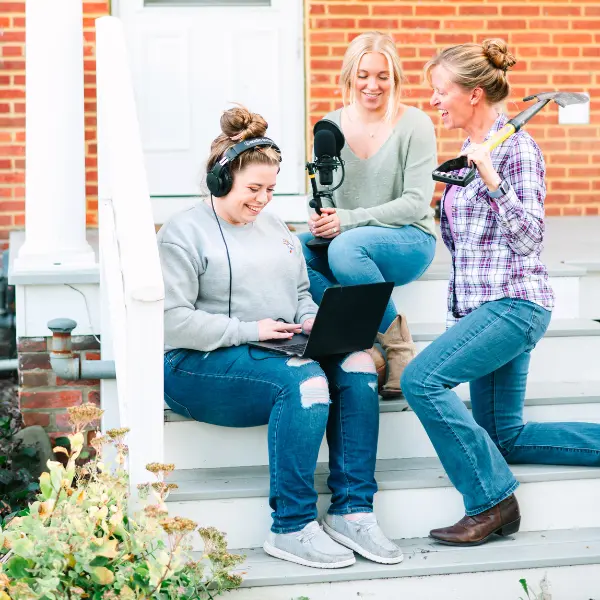
So getting to sit down with Jonathan, the founder of Farmers Friend, on The Flower Files was a full-circle moment for me.
If you're still deciding which kind of structure you need, start with our greenhouse vs hoop house guide. This post is for the next step, when you've decided on a hoop house and want to buy it once and buy it right.
Before You Buy: The Short Version
If you only read one section, make it this one.
- Put it where you work, not where the textbook says. Think about hoses, paths, deliveries and your daily routine before sun angles.
- Consider a kit over DIY. Hand-bent hoops are hard to get consistent, and every missing part is another trip to the hardware store.
- Plan for it to grow with you. End walls, roll-up sides and better plastic can all come later.
- Think about your weather. If you get real snow, a gothic arch sheds it far better than a rounded Quonset-style tunnel.
- Budget for the add-ons that make it work. UV-rated sandbags, quality fabric and silage tarps aren't upsells if you actually need them.
How Farmers Friend Started
I love a good origin story, and this one is a great one.
Jonathan grew up on his family's farm in Tennessee, about an hour south of Nashville. His dad was a teacher who left a one-room church school in 1998 to farm, and Jonathan and his siblings were homeschooled, did their book learning in the morning and spent the rest of the day working on the farm. He learned to run equipment, fix things, weld and fabricate.
His dad's farming mentor, through books, was Eliot Coleman. When Eliot came to Nashville for an event on a Saturday, the family couldn't go, because they keep the Sabbath. So Jonathan's sister wrote Eliot a letter asking if he'd meet them for breakfast on Sunday instead. He said yes, and that breakfast led to an open invitation to visit Eliot's farm in Maine.
When Jonathan visited at about sixteen, Eliot noticed his inventive streak and told him the industry needed a mechanized harvester for salad greens. Jonathan had spent plenty of hours on his hands and knees harvesting greens, so he knew exactly what that meant.
About three years and a dozen prototypes later (the first one was a modified hedge trimmer with an aluminum basket bolted to the back), he drove to Maine to demo it. Johnny's Selected Seeds asked how soon he could be in production. He was eighteen, with no manufacturing background, and the greens harvester launched in the fall of 2012.
When Johnny's stopped carrying it two years later, it felt like failure. Instead, Jonathan built a website and started selling directly to growers, and they sold more harvesters that third year than the two before it. That's how Farmers Friend became the company it is today.
Where Should You Put a Hoop House?
This is the lesson I learned the expensive way.
Everybody told us to put the hoop house close to the house, somewhere protected. So we did. And it was so in the wrong spot. We had hoses running across the driveway, everybody was driving over them, and when the UPS driver told me he couldn't pull in any further because the hoses were across the driveway again, I was done.
So we disassembled the entire thing and put it back up in its new spot, before we bought our second one. That was six years ago, and it hasn't moved since.
Jonathan says Farmers Friend gets this question constantly, usually as "which direction should my tunnel face?" There is a by-the-book answer about orientation, sun and prevailing wind. But his advice is to look at the layout of your land and your operation first, because where the tunnel fits into your daily workflow matters more than the textbook orientation.
My version is simpler. Before you pick a spot, ask yourself: does anybody have to drive over the hoses?
I share more about my early mistakes, including this one, in how to start a flower farm.
Should You Buy a Hoop House Kit or Build Your Own?
When Jonathan was first looking at caterpillar tunnels, the popular route was DIY. You'd buy a hoop bender and brackets, source pipe locally and build the whole thing from scratch. When he ran the numbers, it was expensive, and it was a lot of work.
I know the DIY struggle from our small hoops. We bend our own to hold Agribon over specific crops. I'll start a row needing a dozen or fifteen hoops, get pulled away to something else, and the ones I bend later never match the first ones. It's just not consistent.
Farmers Friend's answer was a complete kit that packs onto a single pallet and ships by freight anywhere in the country. You unpack it and build it. Their prices are listed right on the website, so you can order without going through a quote process.
His favorite review ever? A customer who said it was the first farm project that didn't take multiple trips to the hardware store.
Can You Put Up a Hoop House Yourself?
Yes. I promise.
I like tools and I'll happily drive the tractor, but I know a delivery like this can feel intimidating. What made the difference for me was clear directions, every part being in the box, and the installation videos. Jonathan's goal is that you can watch the video in about thirty minutes and come away thinking, "I could do that."
I watched a section, paused, did that part, and moved on to the next. It took part of one day. Not a week, not three days. When we bought our second, I just blocked off a day and we built it.
And there's real pride in that. I put every screw and bracket in place myself, and every time I walk into that tunnel I know I built it.
Will Your Hoop House Grow With You?
This is the part nobody tells you. Your first structure doesn't have to be your forever structure.
Ours started as a little 50-foot Quonset-style tunnel with pull-down plastic, and I'd crawl underneath to get in. Then we added end walls. Then real end walls. When we bought our second one, we chose a gothic arch, because I was done with snow.
Rounded tunnels hold snow. We don't get much here, but when we do it can be a lot, and I'd be out every couple of hours through the night tapping the roof with a push broom while everybody else slept and I kept shoving wood into the stove.
We've added more since. And this past season we converted our very first tunnel with roll-up sides and double-wall plastic. It's now our step-down space: seedlings go from the sheltered greenhouse nursery into this tunnel, which has a little heat but lets us roll up the sides and get everybody ready for the real world.
Here's how the Farmers Friend lineup works, as Jonathan described it:
| Structure | Width | What it is |
|---|---|---|
| Caterpillar tunnel | Varies | The simple, low-cost tunnel that started it all, built to ship on a pallet |
| Haven High Tunnel | 16 feet | Gothic frame with roll-up sides |
| Guardian High Tunnel | 21 feet | Straight sidewalls and the features of a more permanent high tunnel |
| Defender High Tunnel | 30 feet | Their newest and widest, in a soft launch at the time we recorded, in multiple lengths |
Is a Hoop House Worth the Money?
For us, without question.
Jonathan says a tunnel can give you four to six weeks on either end of the season, and Farmers Friend has heard from customers who paid for their tunnel with their very first crop of lettuce, and then got three or four more crops out of it that year.
The season extension is only part of it. A tunnel gives you control. If it rains for a week straight, crops in the field are at risk of disease, but inside the tunnel you decide how much water they get. If you have to hit specific volumes for specific markets on specific dates, that control matters a lot.
And honestly? In February, when it's cold and miserable, I can go stand in the hoop house and think, okay, there's hope.
If you want to see what we actually grow in ours, take a peek at Episode 36: Hoop House Growing.
The Add-Ons That Actually Matter
When you add a tunnel to your cart at Farmers Friend, it suggests things like sandbags. I don't see that as an upsell, because the add-ons make sense together. If you're new and grab cheap sandbags somewhere else, you won't know they're not UV rated until they fall apart.
I learned that with fabric. We use DeWitt fabric, and one year I thought I'd save money on fabric for our walkways with something cheaper. It came apart under our feet. Never again.
Silage tarps are another one. Jonathan first saw them used on a small farm in 2015 at Jean-Martin Fortier's farm, and Farmers Friend started selling them because they were so hard to find. We grow in blocks and rotations, and before every new rotation goes in, the silage tarp goes down. Everything underneath does what it's supposed to do, the weeds die off, and I'm not spraying or adding as many amendments.
Pre-Burned Landscape Fabric for Flower Beds
This was the moment in the episode that made me sit up, because it's made for flower growers.
Farmers Friend sells Quick-Plant fabric, DeWitt landscape fabric with the holes already burned in a planting pattern. They've recently added flower patterns: fabric six feet wide, designed for four-foot bed tops, with 6, 9 and 12-inch spacing.
If you've never burned your own holes, here's what it looks like at our farm. It takes two of us in the driveway, never on top of the beds. One person holds the form, the other runs a torch connected to a big propane tank, and we work through 100-foot sections at a time, lining everything up so it's finished before it goes out.
Pre-burned fabric means cleaner holes, no fumes, and a lot of time back. Jonathan said he started working on this product in 2016, and one of their machines burned down along the way. They're on their fourth machine now. That is grit.
You can see how fabric stacked up against the other options we tried in how we compared mulch and fabric, and find Quick-Plant fabric at Farmers Friend.
What's Coming Next From Farmers Friend
Jonathan shared a few things in the works when we recorded:
- Long-handled tools with aluminum handles. They took over production of the Two Bad Cats flex tine weeders and wire weeders, and they're testing collinear hoes, stirrup hoes and a torsion weeder. No wooden handles, which means no sanding, no oiling and nothing for me to snap.
- Right-angle transplanting trowels in a narrow width for small plugs and a wider one for four-inch pots.
- A garden cart. He wouldn't say much, except that the space needs a fresh perspective.
Grit, Growth and Getting It Done
Something I said on the episode is that farming teaches you grit. If you're tired and you don't feel like it, something is going to die.
Jonathan laughed, because GRIT is the acronym for Farmers Friend's core values: growth, respect, innovation and teamwork. He remembers sitting at the top of a 250-foot row of strawberries at eight years old, needing to weed around every single plant, sure he'd never reach the end.
That's what I loved most about this conversation. The harvester took three years. The fabric took four machines and a fire. Losing their biggest retailer turned into their best year. You take the idea, you work on it, and when you hit the roadblocks, you keep going.
Where to Find Farmers Friend
- Website: farmersfriend.com, including their searchable library where each video has a written article to go with it
- Email list: sign up here. Jonathan says most emails include something educational, and you can always unsubscribe.
- Instagram: Farmers Friend on Instagram
- YouTube: The Good Life for their cinematic grower stories, and weekly updates from his family's farm, where his dad shares a lot of education
And I'll say this: their customer service is incredible. Even when I've had a question I wasn't sure was worth asking, a real person answered.
Planning Your Next Season?
A hoop house is a big decision, and the best way to make it is to know exactly what you want it to do for you. Our free Cut Flower Garden Planning Guide walks you through planning your season, including what to grow, when and where.
And if you're at the "is it time to invest?" stage, those are exactly the conversations we have in Rooted. Big purchases feel a lot less scary when you have someone to talk them through with.
Frequently Asked Questions
Where is the best place to put a hoop house?
Wherever it fits your daily workflow. Orientation, sun and wind matter, but most hoop houses can handle the weather, so think first about water access, paths, deliveries and how you move through your farm every day. We moved our first one after realizing the hoses had to cross our driveway.
Is it better to buy a hoop house kit or build one yourself?
For most small farms, a kit is easier and often more consistent. Building from scratch means bending your own hoops, sourcing pipe and parts locally, and usually several trips to the hardware store. A complete kit arrives with everything you need.
Can one person put up a hoop house?
Many growers put up their own. Ours took part of one day, following the printed directions and the installation videos one section at a time. An extra set of hands helps with the plastic.
How much does a hoop house extend the growing season?
Jonathan from Farmers Friend estimates four to six weeks on either end of the season. A tunnel also gives you control over water and timing during wet stretches, which helps protect crop quality.
Is a gothic arch hoop house better for snow?
Yes. The peaked shape of a gothic arch sheds snow much better than a rounded Quonset-style tunnel, where snow can sit on the roof and has to be knocked off by hand.
What is a silage tarp used for on a flower farm?
A silage tarp is laid over a bed between plantings to smother weeds and prepare the soil. We put one down before every new rotation, and it lets everything underneath break down naturally without spraying.