
From the outside, farmers markets can look like the perfect small-business dream.
There is fresh bread, hot coffee, live music, smiling customers, and a whole lot of community energy. It feels welcoming, supportive, and maybe even a little magical. For many growers, it seems simple enough: grow flowers, show up at the market, and sell bouquets.
But once you step into that world as a vendor, you quickly realize there is much more going on behind the scenes.
Farmers markets are community spaces, yes. But they are also businesses. That means they come with unspoken rules, relationship dynamics, territorial tension, and competition that does not always make it onto Instagram.
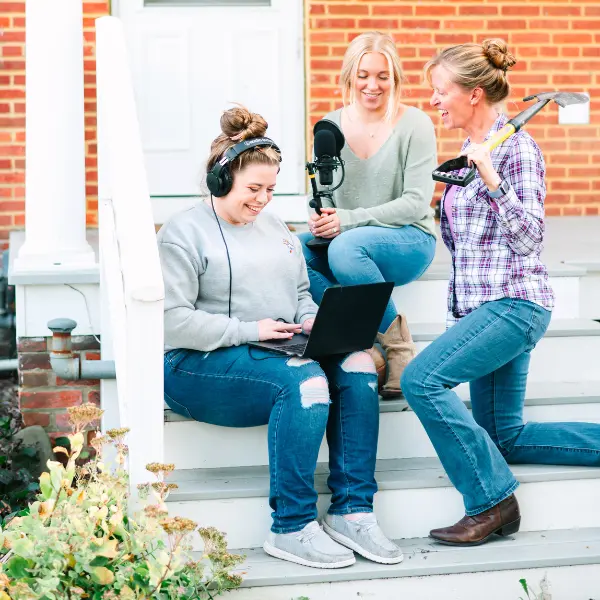
In this episode of The Flower Files, Liza pulls back the curtain on what we call “farmers market politics”— the vendor dynamics, market manager relationships, pricing pressure, product overlap, and quiet tensions that can shape your experience in a big way.
The Myth That Everyone at the Market Is Just Friends
When we first start at a farmers market, it is easy to assume everyone is there in the spirit of pure community.
And to some extent, that is true. Farmers markets do create real connections. They bring together local growers, makers, and shoppers in a way that feels personal and meaningful.
But every vendor is also there to make money.
That changes the dynamic.
We may genuinely like the soap maker, the baker, or the produce farmer next to us, but the moment products start overlapping or one booth begins drawing more attention, the atmosphere can shift. Tension does not always show up loudly. Sometimes it shows up quietly through side comments, competitive energy, or subtle pushback.
That is why one of the most important lessons for new vendors is this: be friendly, but do not be naive.
Farmers Markets Are Built on Relationships and Business
A successful market experience is not just about having a good product. It is about understanding the ecosystem.
That includes:
- customer relationships
- vendor relationships
- category limits
- market rules
- booth placement
- pricing strategy
- reputation
- consistency
If we walk into a farmers market thinking it is only about bringing a pretty product, we are likely to get blindsided by the business side of it.
And that is often where burnout begins.
Product Overlap and Category Limits Are Real
One of the biggest surprises for many vendors is how much strategy sits behind market categories.
Some markets allow multiple flower vendors. Some only allow one or two. Some do not permit duplicates at all. In those environments, who got there first matters. If we are the first flower farmer, we may have more influence. If we are the second, we need a stronger strategy.
Because here is the reality: some vendors will quietly advocate to keep competition out.
It may not be obvious. It may never be said directly. But it happens.
That means we cannot rely on simply being “the flower person.” We need to become more specific and more valuable than that.
How to Stand Out at a Farmers Market
When categories are limited or competition is close, differentiation matters.
We are not just selling flowers. We are selling something more defined and more memorable.
That might look like:
- locally grown flowers
- specialty varieties
- designer bouquets
- edible petals
- bouquet subscriptions
- workshop sign-ups
- a recognizable brand style
- a product mix customers cannot get elsewhere
The goal is to become irreplaceable in the eyes of both the customer and the market itself.
When we become a meaningful part of the fabric of the market, we are no longer just filling a vendor slot. We are contributing something distinct.
Booth Placement Has More Power Than Most People Realize
Booth placement may seem like a small logistical detail, but it can have a major impact on sales and visibility.
A corner booth often gets more attention. A booth near the entrance can benefit from early traffic. A spot near coffee or bread often gets natural spillover. A booth tucked in the far back may require more effort to attract customers.
And those placements are rarely random.
Sometimes they are based on seniority. Sometimes they are based on consistency or performance. Sometimes there is favoritism involved. Sometimes booths rotate, and sometimes they do not.
That can feel frustrating, especially when we believe a better spot would help us perform better.
But publicly complaining about placement rarely works in our favor.
A stronger approach is to prove our value through strong sales, a beautiful display, consistent professionalism, and customer engagement. Markets tend to reward performance more than frustration.
Pricing Tension Is Part of the Market Experience
Pricing is one of the fastest ways to feel pressure at a farmers market.
If one flower vendor is selling bouquets for $30 and another is pricing them at $18, customers notice. Other vendors notice too. And once people start comparing, tension can follow.
This is where many growers start second-guessing themselves.
But pricing is not just a number. Pricing is positioning.
If our bouquets are priced higher, we need to be able to explain why. Maybe our flowers were cut that morning. Maybe they are locally grown. Maybe they include specialty varieties. Maybe they last longer in the vase. Maybe the design is more intentional and premium.
The answer is not to race to the bottom.
The answer is to educate and communicate value.
Cheaper pricing may attract attention at first, but vendors who underprice often struggle to sustain their business long term. Premium growers who build trust and loyalty tend to create more stability over time.
The Copycat Effect Is Real
If we bring something original to market and it does well, there is a good chance someone else will try it too.
Dried bouquets. Bouquet bars. Specialty add-ons. Display concepts. Promotional ideas. It happens all the time.
That can feel frustrating, especially when we worked hard to think creatively.
But copycats are often a sign that we are leading.
The real advantage is not in doing one thing first. It is in continuing to evolve.
Innovation beats imitation.
Our brand is not just a single product. It is the combination of consistency, creativity, customer experience, and execution. That is much harder to copy than one idea.
Why Your Relationship With the Market Manager Matters
One of the most important business relationships at any farmers market is the one we build with the market manager.
Market managers have a difficult role. They enforce rules, handle complaints, decide vendor placement, approve new vendors, and manage the overall flow of the market.
If we treat them like staff, we weaken that relationship. If we treat them like partners, we strengthen it.
That means:
- showing up on time
- paying fees promptly
- following the guidelines
- asking clear questions
- communicating professionally
- being reliable week after week
Reliability builds trust. Trust builds leverage.
And when an issue does arise, having a respectful working relationship already in place can make a huge difference.
Stay Out of the Gossip
Markets can sometimes feel surprisingly similar to high school.
Who sold out. Who underpriced. Who complained. Who drew the biggest crowd. Who did not engage. Who was upset with whom.
That kind of talk can spread fast.
But if we are trying to build a long-term business, gossip does not help us do it.
We are building a brand, not drama.
Our reputation can spread faster than our bouquets, and professionalism almost always wins in the long run.
Build Smart Alliances Instead of Feeding Competition
Not every vendor relationship needs to feel competitive.
Some of the strongest market strategies come from collaboration.
A flower grower might partner with:
- a baker for a bread-and-blooms bundle
- a coffee stand for a Mother’s Day promotion
- a produce farmer for cross-marketing
- another complementary vendor for a seasonal special
These partnerships strengthen community while also strengthening visibility.
Politics tend to soften when collaboration becomes intentional.
That is one of the most practical ways to make a market feel less tense and more sustainable.
Burnout Happens Faster Than People Expect
Farmers markets are physically and mentally demanding.
We harvest early. We design. We load the vehicle. We drive. We set up. We sell. We stay “on” for hours. Then we break down and head home exhausted.
Add comparison, political tension, or pressure from other vendors, and it becomes very easy to burn out.
That is why tracking our own numbers matters so much.
Instead of watching what everyone else is doing, we need to pay attention to our own data:
- repeat customers
- sales trends
- best-selling products
- seasonal patterns
- what actually performs over time
Comparison drains energy. Data creates clarity.
It Is Okay to Leave a Market That No Longer Fits
This is an important point, especially for growers who feel guilty about stepping away.
Not every market is the right fit forever.
If traffic is declining, management is inconsistent, rules keep changing unfairly, or vendor tension becomes constant, it may be time to re-evaluate.
Leaving does not mean we failed.
It means we are making a business decision.
Loyalty matters, but sustainability matters more.
We are building a business, not trying to win a popularity contest.
Systems Make Market Politics Easier to Handle
One of the best ways to protect ourselves from market chaos is to build strong systems.
When our crop mix is intentional, our harvest flow is efficient, our pricing is strategic, and our display is clear and consistent, we become less reactive to the noise around us.
Systems help us stay grounded.
They allow us to sell with clarity, make decisions with confidence, and focus on what actually moves the business forward.
The more organized and intentional we are behind the scenes, the less likely market politics are to shake us.
Integrity Outlasts the Drama
At the end of the day, farmers market politics are real.
There are tensions, power dynamics, unspoken rules, and moments that feel frustrating or personal. But if we continue to show up consistently, bring quality, act professionally, and serve customers well, integrity becomes the thing that scales.
That is what builds trust.
And once customers trust us, they come for us. Not for booth placement. Not for gossip. Not for the market drama.
They come because they know what we offer and how we show up.
That is the long game.
Stop Guessing. Start Growing Your Market Strategy.
If you are selling flowers at a farmers market — or thinking about starting — this is your reminder that success is not just about having a beautiful product.
It is about understanding the full picture.
Markets can be incredible revenue streams, but only when we approach them with clarity, strategy, and strong systems. We need to know how to navigate vendor dynamics, how to communicate our value, how to build the right relationships, and how to protect our energy in the process.
The goal is not to feed the politics.
The goal is to grow boldly, sell intentionally, and build a business with grace.
That is what sets us apart!