Creating a lush, show-stopping holiday wreath isn’t just about decoration—it’s about storytelling. In this episode of The Flower Files, we’re diving deep into the wild (and sometimes sticky!) world of natural wreath-making, sharing how to transform everyday greens and foraged treasures into seasonal masterpieces. Whether you’re decking out your front door or gifting something handmade, we’re here to help you craft wreaths that are beautiful, long-lasting, and undeniably brag-worthy.
Why Natural Wreaths Are Having a Moment
Today’s wreaths are more than just circles of evergreen—they’re statements. A well-crafted, natural wreath feels luxurious, eco-friendly, and deeply personal. Whether you’re using wild cedar, fragrant eucalyptus, or dried florals from your own garden, every element contributes to a story of place, intention, and seasonal beauty.
Step One: Start with the Right Base
Before you clip your first branch, you need the right structure:
- Wire wreath rings (double or triple rails are best to avoid the dreaded wreath spin)
- Paddle wire (22–24 gauge for most wreaths)
- Grapevine wreaths (natural and rustic, but handle gently)
- Clippers (get heavy-duty ones—floral snips won’t cut it, literally)
Pro Tip: Measure your door! A 12” ring often becomes a 20–24” wreath once fluffed out.
Step Two: Build Your Bundle
Your bundles are the building blocks of your wreath. Think of them as mini arrangements of greens and accents. Most bundles use 4–7 pieces and alternate throughout the wreath to build texture and fullness.
Common greens to include:
- Spruce: A firm favorite for structure.
- Pine: Light, airy, and aromatic (but sticky!).
- Cedar: Lays flat but has great texture and berries.
- Boxwood & Magnolia: Adds polish and elegance.
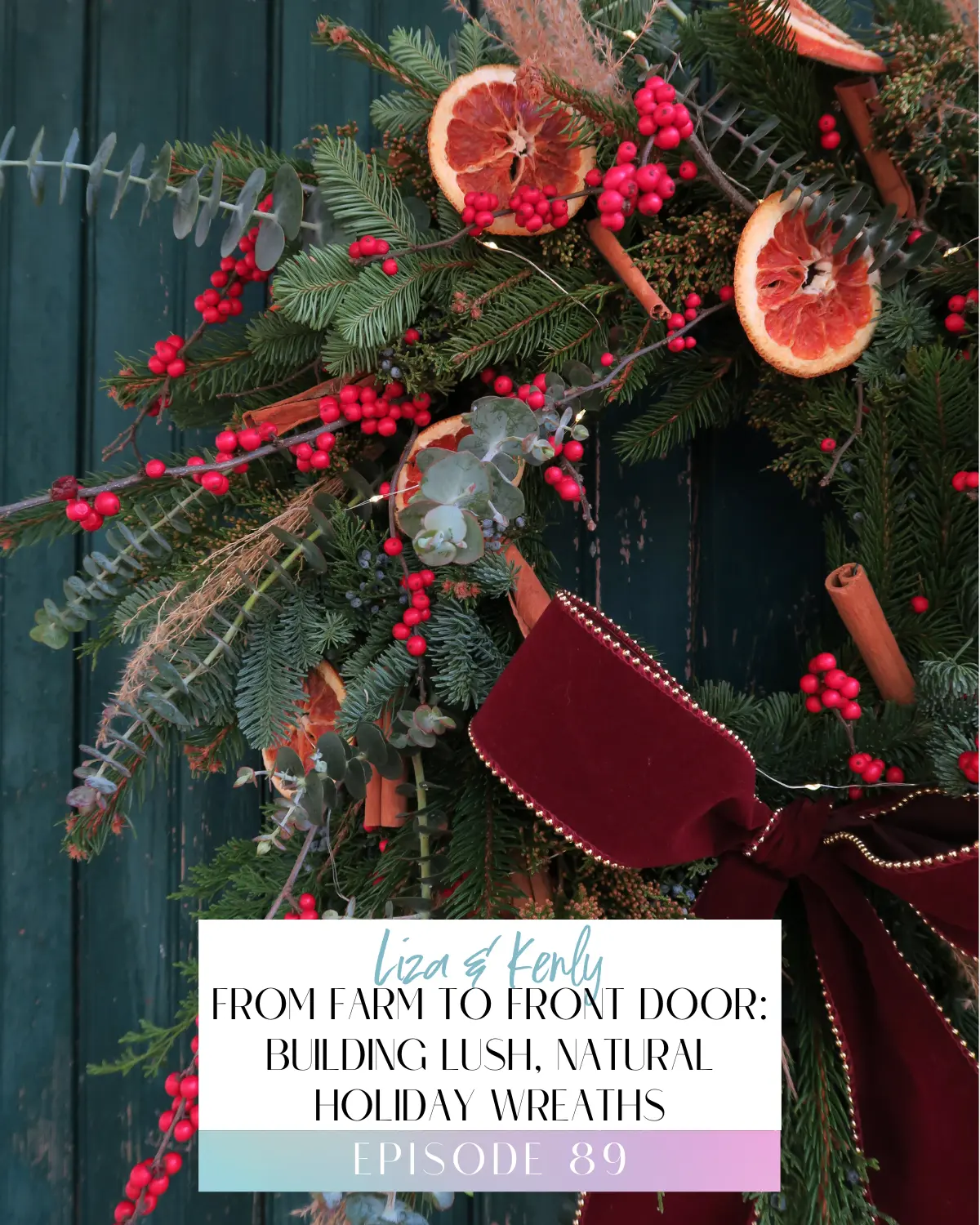
- Eucalyptus: A go-to for modern, silvery-toned wreaths.
Texture is key. The more variety you add, the more visually captivating your wreath becomes.
Step Three: Add Natural Accents
Here’s where your wreath goes from pretty to Pinterest-worthy. Think beyond ornaments and bring in nature’s finest:
Natural Wreath Add-ons:
- Pine cones (gather in late summer for best results)
- Dried oranges & cinnamon sticks (hello, holiday scent!)
- Dried florals (strawflower, yarrow, statice, gomphrena)
- Seed pods (like Echinops or Nigella)
- Herbs (rosemary, lavender, sage)
- Grasses for softness and movement
You can also play with coastal, woodland, or luxe holiday themes:
- Coastal: Oyster shells, driftwood, sea grasses, and blue velvet ribbon
- Wild Woodland: Juniper berries, mushrooms, pine cones, acorns
- Modern Luxe: Magnolia, gold accents, velvet bows
Remember: Know your foraging! Avoid invasive species like Phragmites and watch out for look-alikes like poison ivy when harvesting grapevine.
Step Four: Make It Yours
Wreath-making is part craft, part creativity. There are no strict rules—just guidelines to help you get the look you love.
Finishing touches:
- Wired ribbon: Easier to shape and fluff
- Glue vs. Wire: Wire is more durable for outdoor wreaths; glue can fail with humidity
- Final checks: Step back, fluff, and trim for symmetry
Tip: Don’t be afraid to clip and shape your wreath as needed. It’s your creation—own it!
Wrapping It Up (Literally)
Whether you’re crafting wreaths for a front porch, farmers market, or festive dinner party, remember that nature is the best designer. Mix textures, experiment with color, and most importantly, have fun with it. A handmade wreath doesn’t just say happy holidays—it says I made this with love.Made your own wreath? Share it with us on Instagram and tag @wildlynativeflowerfarm!