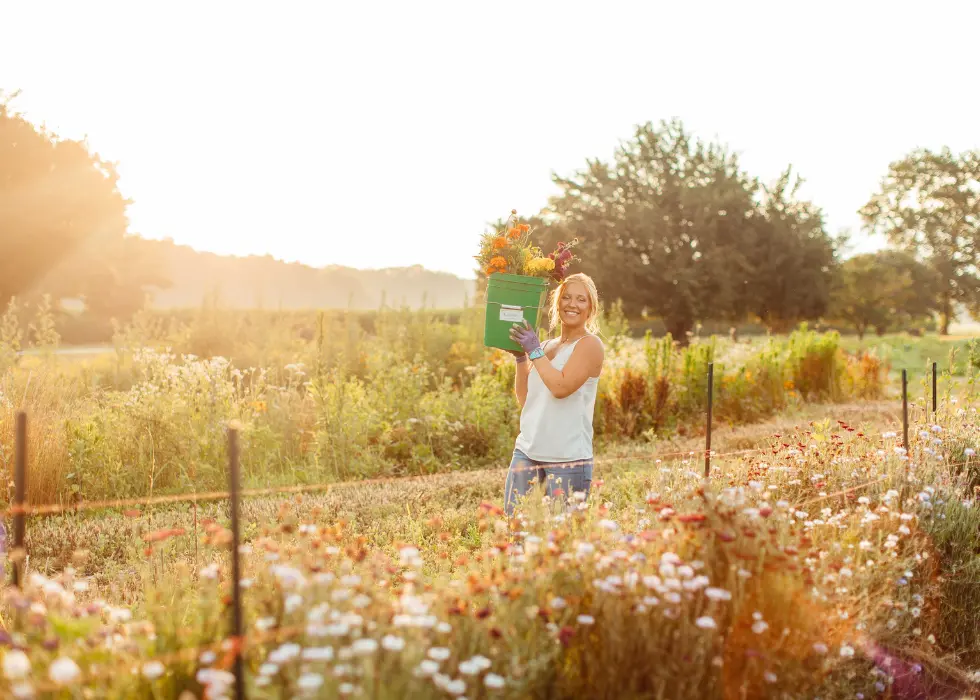
If you are into gardening and flowers already you know there are TONS of hacks about how to make flowers last longer in the vase, add sugar, add balled up aluminum foil, add soda, place a dime or penny in the water, add floral food from the store, wash the vase with vinegar only… the list goes on and on honestly. Bottom line? None of these matter a bit if you have not harvested the flowers at the right time. Vase length starts with harvest being done correctly.
Mistake: Cutting at the Wrong Flower Stage
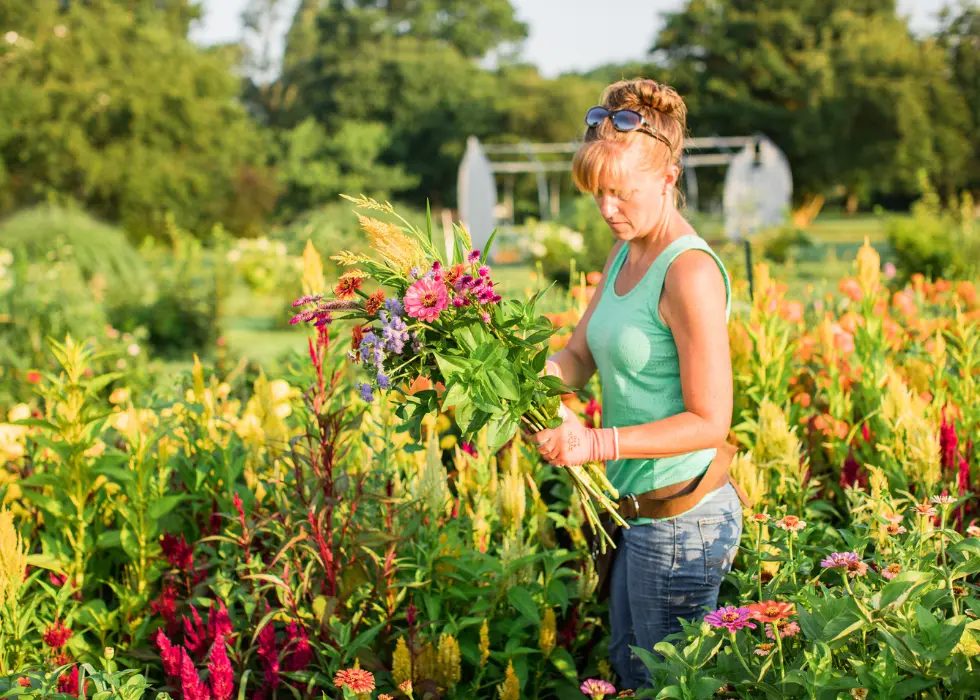
One of the fastest ways to shorten vase life — and reduce the value of your harvest — is cutting flowers at the wrong stage of development. New growers often wait until blooms are fully open because they look beautiful in the garden, but many flowers deteriorate quickly once cut at peak bloom. The goal is not to harvest when flowers look perfect in the field, but when they will perform best in the vase. So many times I have done a farm tour and people ask me where the flowers are… I tell them if there are flowers in the field they are left for pollinators because we have moved to another section of the field (why your succession planting is so important) or we are trying to let them go to seed. If there are flowers in the field it means we havent done our job!
Most cut flowers should be harvested at a specific stage depending on the species. While there are always species specific times to cut flowers, for the most part the rule of thumb is to cut at the earliest time possible for longest vase life. Many spike flowers (like snapdragons or delphinium) are best when only the lower florets are open. Disk flowers (such as sunflowers or rudbeckia) should have centers just beginning to open but not shedding pollen. If you see bees in your sunflowers? You have waited to long to harvest for sure. Rounded blooms like zinnias and dahlias need to be firm and fully developed, not floppy or immature. Zinnias are infamous for their wiggle test to see if their stems are ready to be harvested. Just give them a wiggle and if the flower head is floppy? They are too young to cut. They will not hold up in a vase. If cut too early, some flowers will never open properly; too late, and their vase life can drop from a week to just a few days.
Learning these stages is one of the most important skills a grower can develop because timing directly affects customer satisfaction, event performance, and repeat sales. Professional growers harvest based on how the flower will travel, hydrate, and open — not how it looks in the moment.
When in doubt, test small batches at different stages and track how long they last indoors. The flowers will tell you exactly when they should have been cut. You also have to cut and know what your bloom is being used for as well. If you are harvesting a very tightly budded group of florals so you can have extended vase life then those florals are not ideal for weddings.
Wedding florals need to be beautiful in the moment, last and look perfect. Use them too tight and you will have the wrong look. Use them too far into the bloom cycle and they will droop as well as not hold up for the entire night. Its a tricky balance that trial and error really is the best instructor. So run tests!!! We even learned that flowers dont do well at all under a ceiling fan with our testing so testing is so very important!
Mistake: Harvesting at the Wrong Time of Day
Timing your harvest within the day is just as important as choosing the right stage of the flower. New growers often cut whenever it’s convenient — midday after work, during the hottest part of the afternoon, or whenever helpers are available. Unfortunately, this is when plants are most stressed, dehydrated, and least able to recover after cutting. Flowers harvested under heat stress wilt faster, drink poorly, and have significantly shorter vase life.
The best time to harvest most cut flowers is early morning, after plants have fully rehydrated overnight but before the day warms up. Just to be clear, early morning is when you are already in the field when the sun rises - not 8am in August. At this point, stems are turgid (firm and water-filled), sugars are balanced, and the plant is under minimal stress. Late evening can also work in cooler weather, but avoid cutting when foliage is wet for disease-sensitive crops. Midday harvesting should be a last resort unless you can immediately place stems into deep water, shade, and cooling conditions. Even then its super tricky and you seriously impact vase life.
Professional growers plan their entire workflow around this window because post-harvest quality begins the second a stem is cut. Buckets should be clean enough you would be willing to drink from them yourself, filled with water, and staged in the shade before harvesting begins so flowers can go straight from plant to hydration. Treat harvesting as a race against heat and dehydration — the faster you move from field to water, the longer your flowers will last for customers.
Practical Tip: Dress for a Wet Morning Harvest
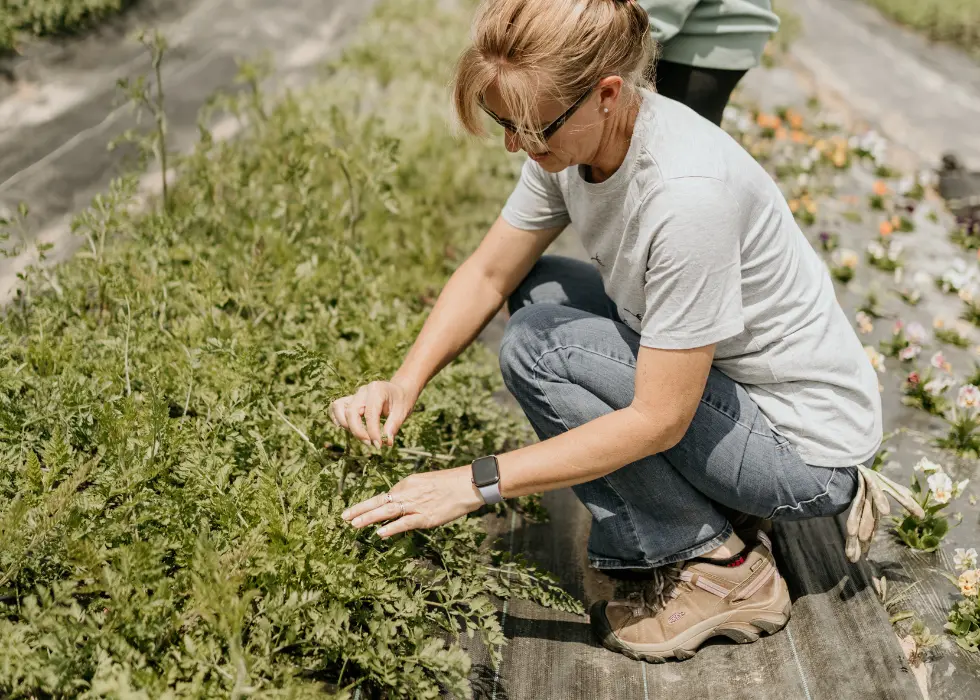
Morning harvesting is ideal for flower quality, but it almost always means working through heavy dew. Grass, foliage, and even your pant legs can become soaked within minutes, leaving you cold, uncomfortable, and distracted before you’ve even filled your first bucket. New growers often underestimate just how wet the field can be at sunrise — especially in spring and early fall.
Wear waterproof or water-resistant shoes that can handle prolonged exposure to moisture, along with socks that won’t stay soggy all day. Rubber boots, waterproof garden clogs, or trail shoes designed for wet conditions are far better than sneakers, which quickly absorb water and become heavy. If you harvest regularly, keeping a dedicated “field pair” by the door can make early starts much easier. You may also want to consider a pair of summer style waterproof coveralls. Those taller plants? They will get you soaked in the morning. Some days it feels like I never dry out…. Dress for the wet!
Staying dry isn’t just about comfort — it helps you move faster, stay warm, and focus on careful cutting rather than rushing to get out of the field. Comfortable growers harvest better flowers, and small practical choices like proper footwear can make a surprising difference over the course of a long season.
Cutting Actually Increases Flower Production
When it comes to regular harvesting, believe it or not, many of the plant's production improves and it encourages more branching. One of the most encouraging discoveries for new growers is that cutting flowers doesn’t reduce production — it often increases it. Many cut-flower crops are naturally programmed to branch when their main stem is removed. When you harvest a bloom, the plant redirects its energy into side shoots, producing multiple new stems where there was previously only one. In essence, careful harvesting turns a single stem into a continuing supply of flowers.
So here’s the science behind it - this response happens because the terminal bud at the top of the plant normally suppresses growth along the sides (a process called apical dominance). Once that top bloom is cut, the plant “releases” the lower nodes, allowing dormant buds to wake up and grow. Crops like zinnias, cosmos, basil, celosia, and many annuals respond especially well, producing bushier plants and longer harvest windows. Instead of thinking of harvest as removal, think of it as strategic pruning that stimulates productivity. Plants like single stem sunflowers? Nope. This rule does NOT apply.
To encourage strong branching, cut deep enough to reach a leaf node where side shoots can emerge, rather than snipping just the flower head. Leaving long, bare stems can result in weak regrowth, while cutting too low may stress the plant. Over time, regular harvesting trains plants to produce a steady flush of market-ready stems. For many cut flowers, the more you cut — correctly — the more you get, which is why consistent harvesting is one of the keys to both abundance and profitability.
Use the Right Tools
It’s tempting for new growers to head into the field with whatever is nearby — household scissors, dull pruners, or even bare hands for soft stems - the Ill run out real quick and just snap one off mentality usually becomes a handful instead when you have that temptation. But harvesting tools directly affect stem quality, plant health, and your own efficiency. Dull or inappropriate tools crush stems instead of making clean cuts, which reduces water uptake and shortens vase life. They can also damage plants, leaving ragged wounds that invite disease or slow regrowth. Those dull clippers really do make your hands tired after harvest too!
Sharp, well-maintained snips or pruners designed for horticultural use make a significant difference. Lightweight floral snips are ideal for soft and medium stems, while sturdier bypass pruners handle woody material like shrubs or thick sunflower stems. You would be surprised by how tough some of these can be! Clean cuts allow stems to hydrate quickly and heal properly, encouraging faster branching and continued production. Keeping tools sanitized — especially when moving between crops — helps prevent the spread of bacterial and fungal problems throughout the field.
Comfort matters too. Harvesting involves thousands of repetitive cuts, so tools that fit your hand and operate smoothly reduce fatigue and the risk of blisters or strain. Many professional growers carry multiple pairs so one can be cleaned, sharpened, or replaced without interrupting workflow. Investing in proper harvesting tools isn’t a luxury — it’s a foundational piece of producing high-quality flowers efficiently and sustainably. It may take a few tries to find the pair that fits best for you, but once you find the type you like? You'll be able to make cuts without even thinking about it. From our experience here on the farm we have found that the snips with rounded tips are best - there are some brands that have incredibly sharp and pointed ends which means you poke holes in your pockets!
How to Avoid Fatigue
Harvest season can quickly shift from exciting to exhausting, especially when flowers are coming in faster than you can cut, hydrate, and process them. Many new growers underestimate how physically repetitive and time-sensitive harvesting is — long hours bent over, early mornings, heavy buckets, and the pressure of not letting blooms go past their prime. Without a plan, fatigue builds, mistakes increase, and the joy of growing can disappear right when the farm is most productive.
The key to avoiding burnout is creating systems before peak season hits. Break harvest into manageable blocks rather than trying to cut everything at once. Prioritize crops by urgency (short vase life first, hardy materials later), stage clean buckets and tools ahead of time, and build a consistent routine so decision fatigue doesn’t slow you down. Even small efficiencies — like using carts, shade stations, or pre-sorted harvest zones — can dramatically reduce physical strain.
Remember to Pace Yourself!
Just as important is pacing yourself and asking for help when possible. Scheduled harvest days, rotating tasks, and realistic production goals protect both your body and your enthusiasm for the work. Remember that flowers are a renewable resource; you don’t have to capture every single stem to be successful. Sustainable harvesting practices aren’t just good for your farm — they’re essential for staying in the business long enough to enjoy the abundance you worked so hard to create. IF a few blooms stay in place? The butterflies will thank you.
Ready to Grow Flowers Worth Cutting?
Harvesting correctly can make a huge difference in vase life, stem quality, and how productive your plants become over the season. But success starts even earlier, with choosing flowers that are actually suited for cutting.
If you want help choosing varieties that are productive, beautiful, and rewarding to grow, take a look at Top Cutting Flowers for Your Garden. It’s a practical guide for gardeners who want to grow better bouquets with less guesswork and more confidence!