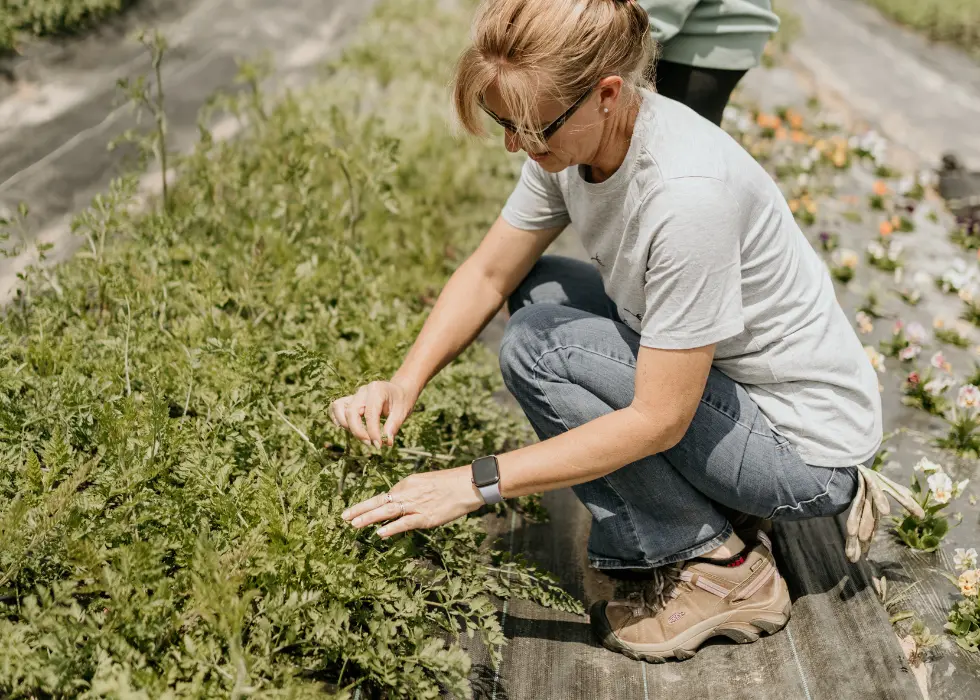
If there's one thing flower farming teaches you quickly, it's this: weeds are not optional.
Whether you're growing a backyard cutting garden or managing a full-scale cut flower farm, weeds are coming whether you're ready or not. Trust me, more often than not, it's when you're not ready. They sneak up on you, and all of a sudden you don't even know where to start.
The goal isn't to create some magical weed-free flower farm that never needs attention. The goal is to create weed management systems that keep weeds under control before they become overwhelming.
The best weed control usually starts long before you ever plant a single flower. Over the years at Wildly Native Flower Farm, we've tried a little bit of everything. Some methods worked beautifully. Some looked great on Instagram but turned into maintenance nightmares. And some became absolute staples in our flower production system because they simply save time, labor, and sanity.
Here are the weed control methods we actually use, what they're good for, and where they can go wrong:
Tarping: One of the Simplest Weed Control Tools We Use
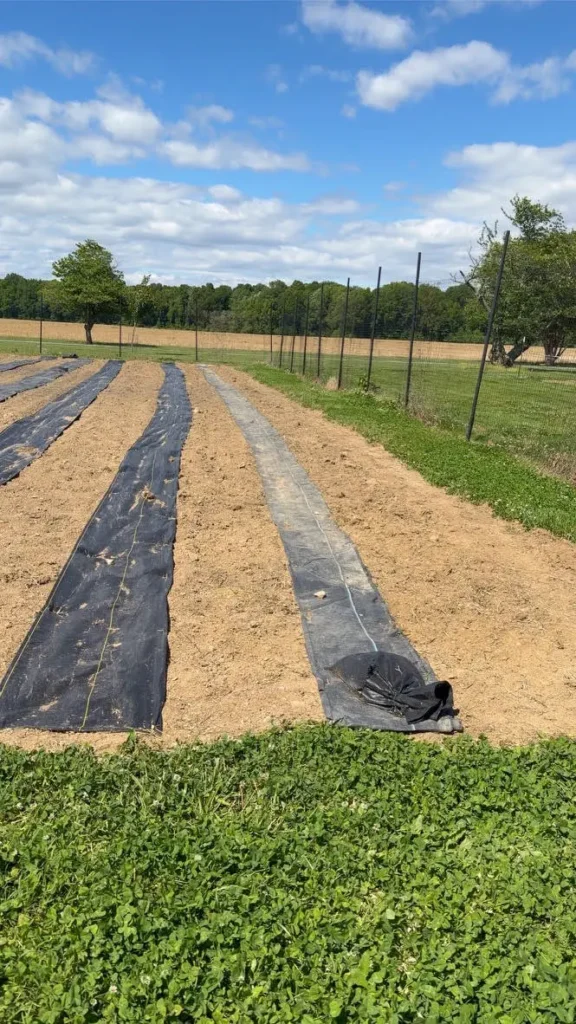
Tarping is exactly what it sounds like: covering the soil with fabric to block sunlight and suppress weeds before planting.
We love the DeWitt brand. It's designed to hold up to intense UV exposure, daily foot traffic, and even the occasional tractor driving across it. It's tough stuff.
This works especially well when you're preparing new flower beds or trying to reset an area that's gotten away from you. The tarp helps weaken existing weeds and gives you a much cleaner starting point.
One of the biggest mistakes people make with weed control is disturbing the entire soil surface all at once. Every time you expose soil, you wake up thousands of dormant weed seeds waiting for their opportunity. With tarping, we uncover only the sections we're actively planting into, which helps reduce that massive flush of new weeds all at once.
Pro Tip: Check with local billboard companies. Used billboard vinyl tarps can often be purchased inexpensively and work well for large-scale weed suppression.
Flame Weeding: Extremely Effective at the Right Stage
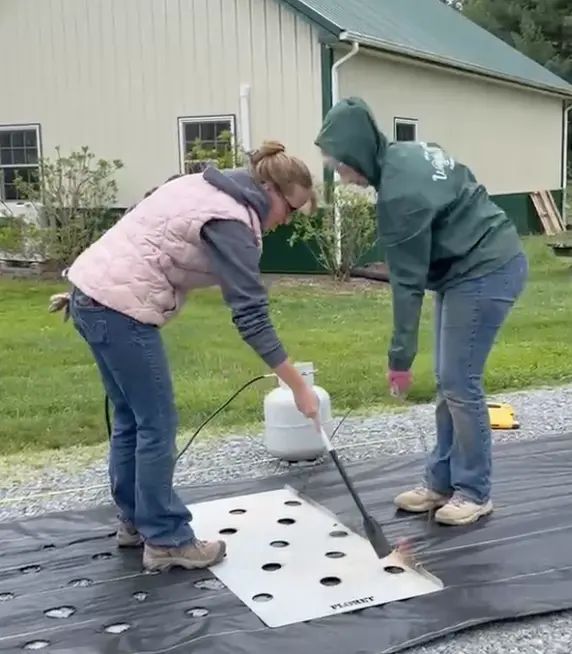
Flame weeding sounds dramatic, but it's actually a strategic weed management tool.
I'll admit, I always feel a little like a dragon when using it.
The key is timing.
Flame weeding works best after you've prepared a bed and weeds have just barely germinated, but before your flower plugs or direct-seeded flowers emerge.
You're not trying to set your garden on fire. Although we have occasionally had to stomp out a few small fires, so please be careful.
The heat disrupts the cell structure of tiny weed seedlings when they're most vulnerable. This can be incredibly useful for direct-seeded flower crops because you can continue flame weeding right up until your seedlings break the soil surface.
It made me nervous the first few times I used it, and honestly, I did it wrong more than once. Keep practicing. You don't need to incinerate the weeds, just damage them enough that they can't recover.
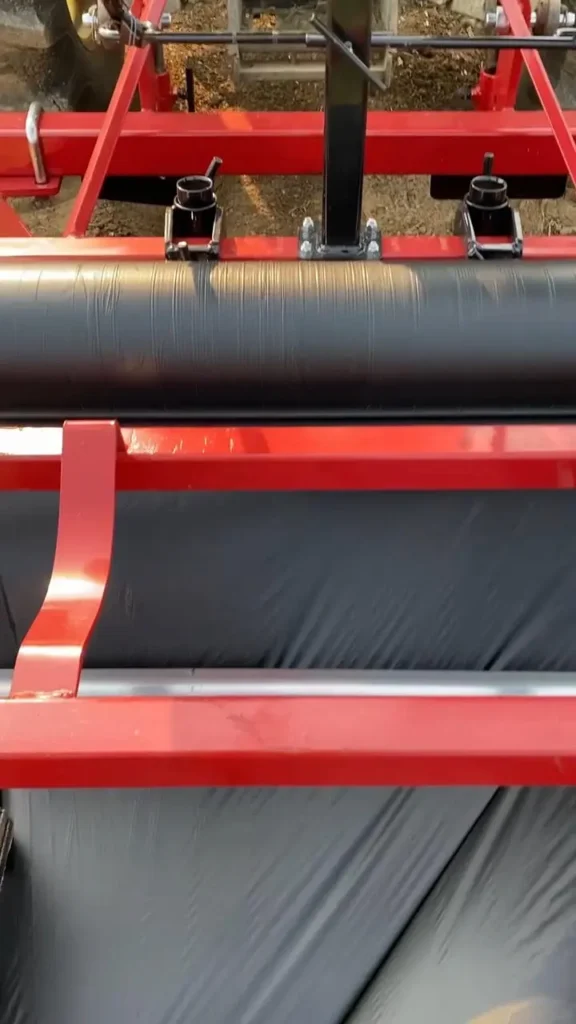
Plastic Mulch: Excellent Weed Suppression When Bed Prep Is Done Right
Plastic mulch can be a game changer for certain flower crops, especially heat-loving varieties.
Today there are traditional plastic films as well as biodegradable options that naturally break down over time. Personally, I refuse to use the plastic that has to be removed and thrown away at the end of the season. From a sustainability standpoint, it goes against everything we stand for.
The biodegradable cornstarch-based options are a great compromise.
There are two catches:
First, plastic mulch magnifies bad bed preparation. If your beds are uneven, full of weeds, or poorly prepared, every problem will show.
Second, timing matters. Remove biodegradable mulch too early and you're pulling apart material that's already breaking down. Wait too long and weeds begin growing through it.
When done correctly, plastic mulch dramatically reduces weed pressure while helping conserve moisture.
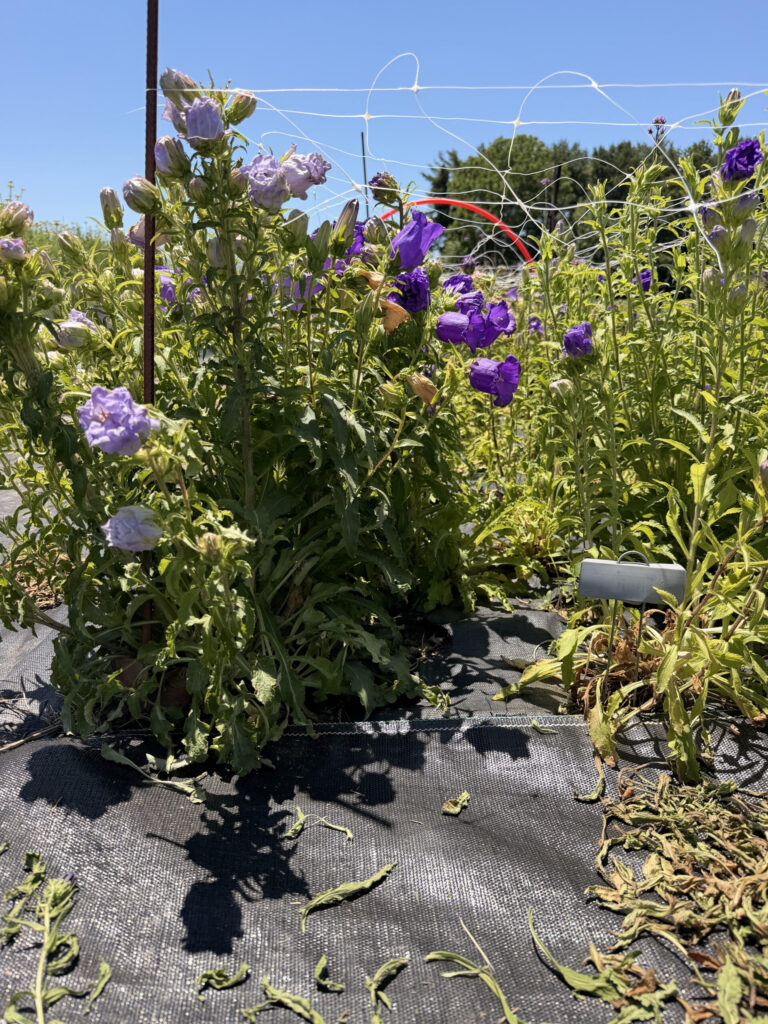
Woven Landscape Fabric: One of Our Most Valuable Long-Term Weed Control Systems
Woven landscape fabric is probably one of the most debated tools in flower farming, but for us, it has absolutely earned its place.
Some growers worry about long-term environmental impacts. From a weed management standpoint, however, it has saved us an immeasurable amount of labor and frustration.
The key is understanding where it works and where it doesn't.
It's fantastic for woody shrubs and annual production systems using grid spacing. Our DeWitt woven fabric has stood up to tractors, daily foot traffic, and years of use.
However, not every perennial loves growing through landscape fabric. Plants that spread aggressively underground, like mint, will absolutely test your patience.
It's also important to understand that landscape fabric isn't maintenance-free. Weed seeds still land on top. Organic matter accumulates. Small tears become opportunities for weeds.
But when maintained properly, it saves an enormous amount of labor throughout the growing season.
Your August self will thank you.
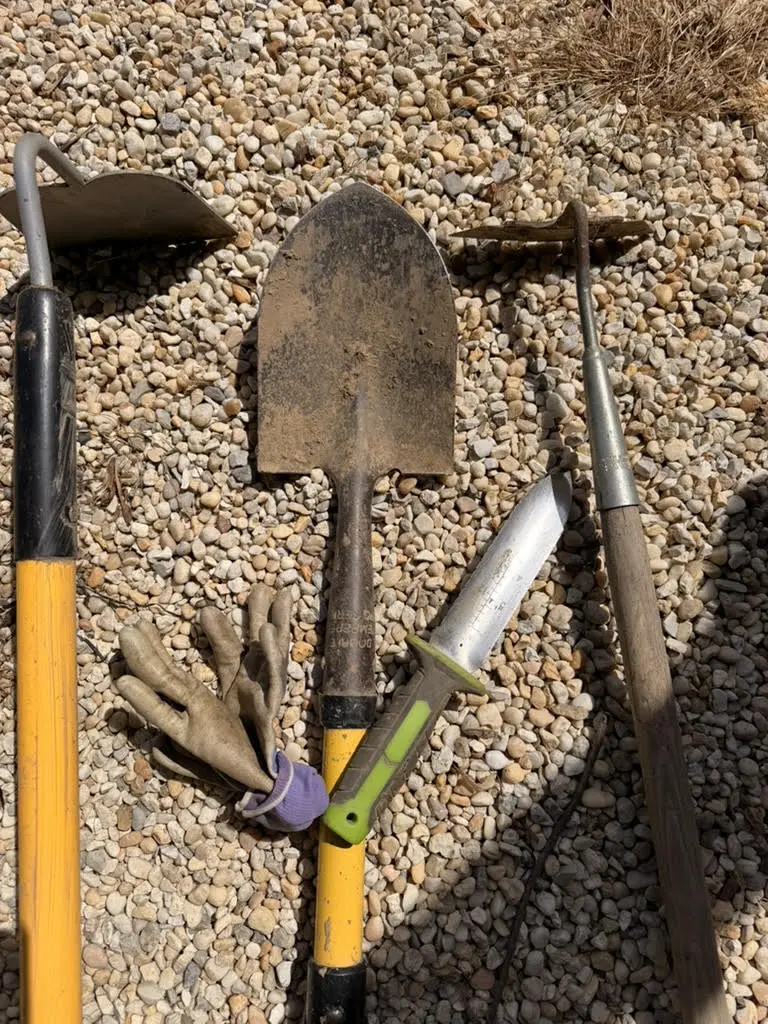
Hoeing: One of the Most Effective Weed Control Methods in Flower Farming
There's a reason experienced farmers still swear by hoes. The secret is catching weeds while they're tiny!
There are several types of hoes designed for different jobs, so choosing the right tool matters. If you're hoeing regularly, row spacing also becomes important. Straight rows allow efficient passes through the field instead of awkward chopping around plants.
The best part is you rarely need to go deep. When weeds are small, quick surface cultivation is usually enough. Ten minutes of hoeing today can save ten hours of weeding later.
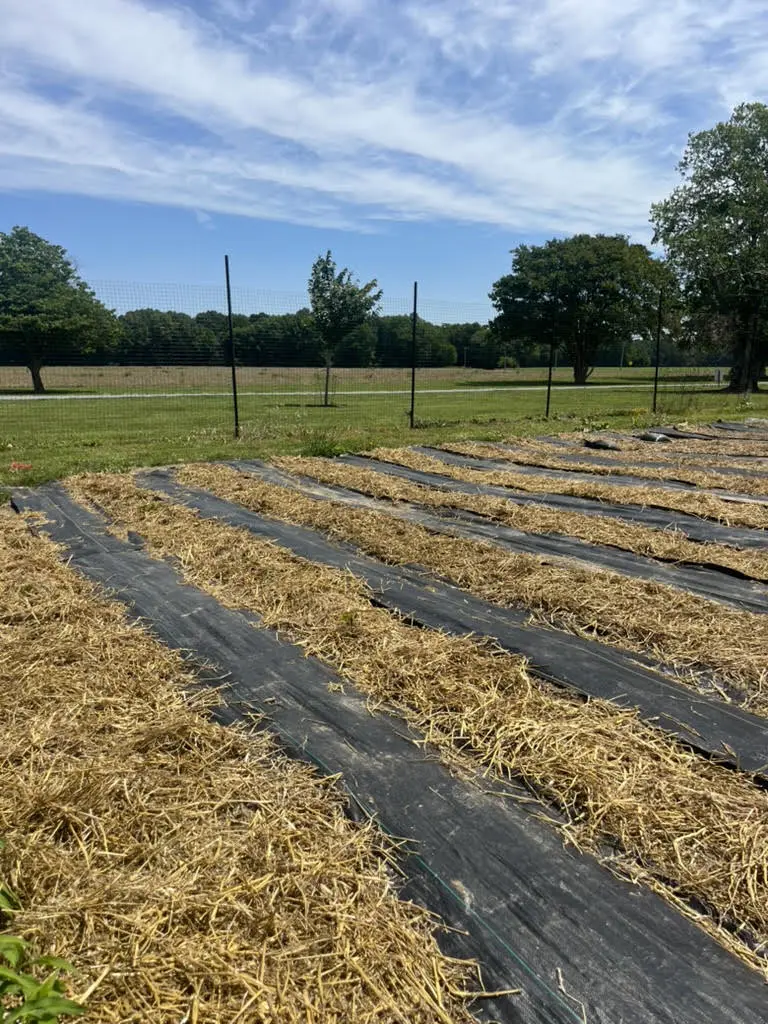
Mulching: One of the Most Underrated Weed Prevention Tools
Mulch works because it tackles several problems at once.
It blocks sunlight, suppresses weed growth, regulates soil moisture, improves soil structure, and reduces erosion.
We've used:
- Shredded leaves
- Compost
- Newspaper
- Cardboard
- Straw
- Wood mulch
- Grass clippings
For perennial beds, one of our favorite systems is newspaper topped with wood mulch. It often lasts an entire season.
For dahlias, we typically use straw mulch. Just make sure your source is clean. Otherwise, you may find yourself growing wheat alongside your dahlias.
Always ask questions before accepting free mulch or grass clippings. Herbicide contamination can seriously damage flower crops.
Soil Sterilization: Useful for Specific Weed Problems
Soil sterilization is generally more common in greenhouse and tunnel production.
Commercial steam sterilization kills weed seeds, pathogens, and beneficial organisms alike.
Solarization offers a lower-tech option. Clear plastic traps solar heat and raises soil temperatures enough to reduce weed pressure over several weeks.
For us, this has always been more of a targeted solution than a whole-farm strategy.
Chemical Weed Control: Read Every Label Carefully
Chemical weed control is one of the most debated topics in agriculture.
Some products burn back top growth. Others kill roots. Some prevent weed seeds from germinating altogether.
If you choose to use herbicides, my biggest piece of advice is simple:
Read the label completely. Then read it again.
Many flower crops are considered broadleaf weeds by common herbicides. Products designed for lawns, pastures, or agricultural fields can easily damage flowers if used incorrectly.
Timing matters.
Application methods matter.
And understanding where not to spray can be just as important as understanding where to spray.
While we generally focus on preventative weed management practices, there are situations where targeted control becomes necessary.
The Biggest Weed Control Lesson We've Learned
The best weed control systems are proactive, not reactive! Most weed disasters happen because small problems were allowed to become massive ones.
You do not need perfect fields. You do not need zero weeds.
You simply need systems that make weeds manageable enough that they don't steal all your time, nutrients, moisture, and energy away from the flowers you're actually trying to grow.
Every flower farmer is still figuring out that balance season after season!
Frequently Asked Questions About Weed Control in Flower Farming
There isn't a single best method. We rely on a combination of tarping, woven landscape fabric, mulching, hoeing, and preventative bed preparation to keep weed pressure manageable.
Yes. Woven landscape fabric can dramatically reduce weeds and labor costs when used in the right production systems and maintained properly.
Flame weeding is safest before flower seedlings emerge. Timing is critical to avoid damaging your crop.
Wood mulch, straw, shredded leaves, compost, newspaper, and cardboard can all be effective depending on the crop and growing system.
Most commercial flower farms use a combination of preventative methods, including tarping, mulching, cultivation, landscape fabric, and targeted herbicide applications when necessary.